Winter tire law in Ontario: what's required, what you get back, and when
Are winter tires required in Ontario?
No. Ontario does not mandate winter tires for passenger vehicles. You can legally drive all winter on all-seasons, and nobody will pull you over for it.
The confusion is understandable. Quebec requires winter tires from December 1 to March 15, and that law gets repeated in enough Canadian news coverage and comment sections that plenty of drivers assume it crossed the border. It didn't. There's no Ontario winter tire law with dates and fines attached.
Here's the part most people miss. There is an Ontario rule on the books about winter tires, and it applies to insurance companies, not drivers. Since January 2016, every auto insurer in Ontario has been required to offer a winter tire discount to customers who run them. That's the real rulebook. Nobody is going to ticket you for driving on all-seasons in February, but you might be paying more for insurance than you have to.
What Ontario does require of insurers
Every Ontario auto insurer has to offer a winter tire discount. It's typically a few percent off the premium, though the exact amount varies by company, so ask your broker what yours is.
The catch is in the wording. Offering a discount and applying one are two different things, and nothing in the system notices that you bought four winter tires. If you put a set on in 2019 and never mentioned it to your broker, you've been paying the full rate ever since. It comes up at the counter more often than you'd think — usually when someone does the math on a few winters of missed discount.
Two to five per cent isn't a life-changing number. On a household with two cars it's still real money, and it takes one phone call.
How to actually claim the discount
Call or email your broker or insurer and tell them all four wheels are on winter tires. Then expect them to ask for proof.
What they usually want:
- The purchase invoice for the tires, showing four of them
- Or the installation work order from the shop that mounted them
- The tire brand and size, sometimes the DOT codes
- Confirmation that all four corners match. Nobody discounts two winters on the front
Keep the changeover invoice in the glovebox. A proper one lists the tires installed, the size, and the date, which is almost always all a broker needs to see.
Ask two more things while you have them on the phone: whether they want the tires declared every year or just once, and whether they need a specific date range. That last one matters more than most people realize.
Which dates actually matter
There are two different date ranges in play, and drivers mix them up constantly.
The insurance season is a calendar rule. Most insurers expect winter tires to be on the vehicle for a defined stretch, roughly October or November through April, and they can ask you to confirm it. Months, not weather.
Weather is what drives the other one. Winter rubber starts outperforming all-season rubber once temperatures drop below about 7°C, and around Guelph and Puslinch that usually lands in the second half of October. We've written that one up in detail over at when to put winter tires on in Ontario, so we won't re-argue it here.
Line them up and the answer is easy: install in late October, take them off in April, and you satisfy both at once. If your insurer gave you a specific range, use theirs.
Do all-seasons count as winter tires?
No. Not for insurers, and not on cold pavement.
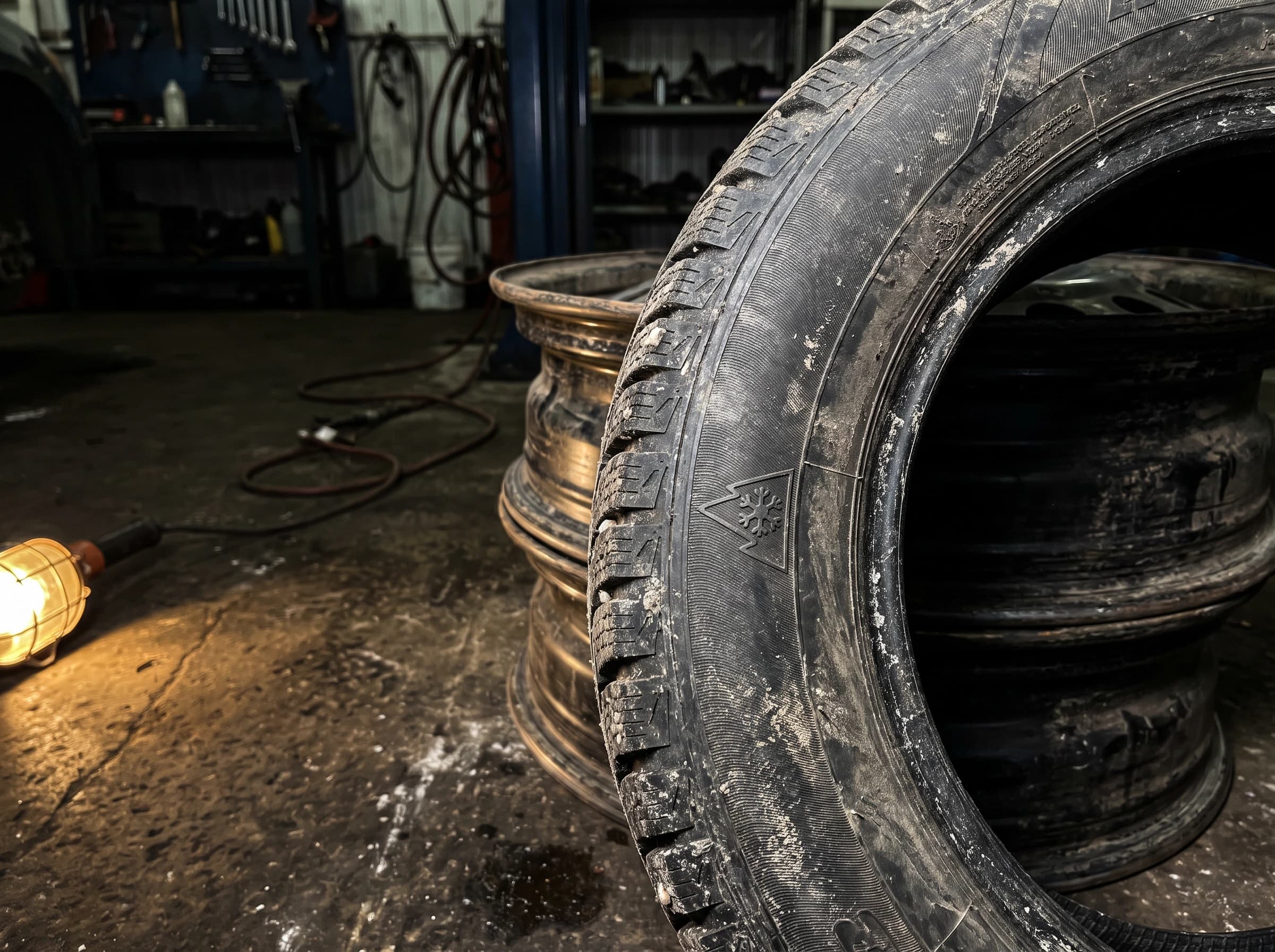
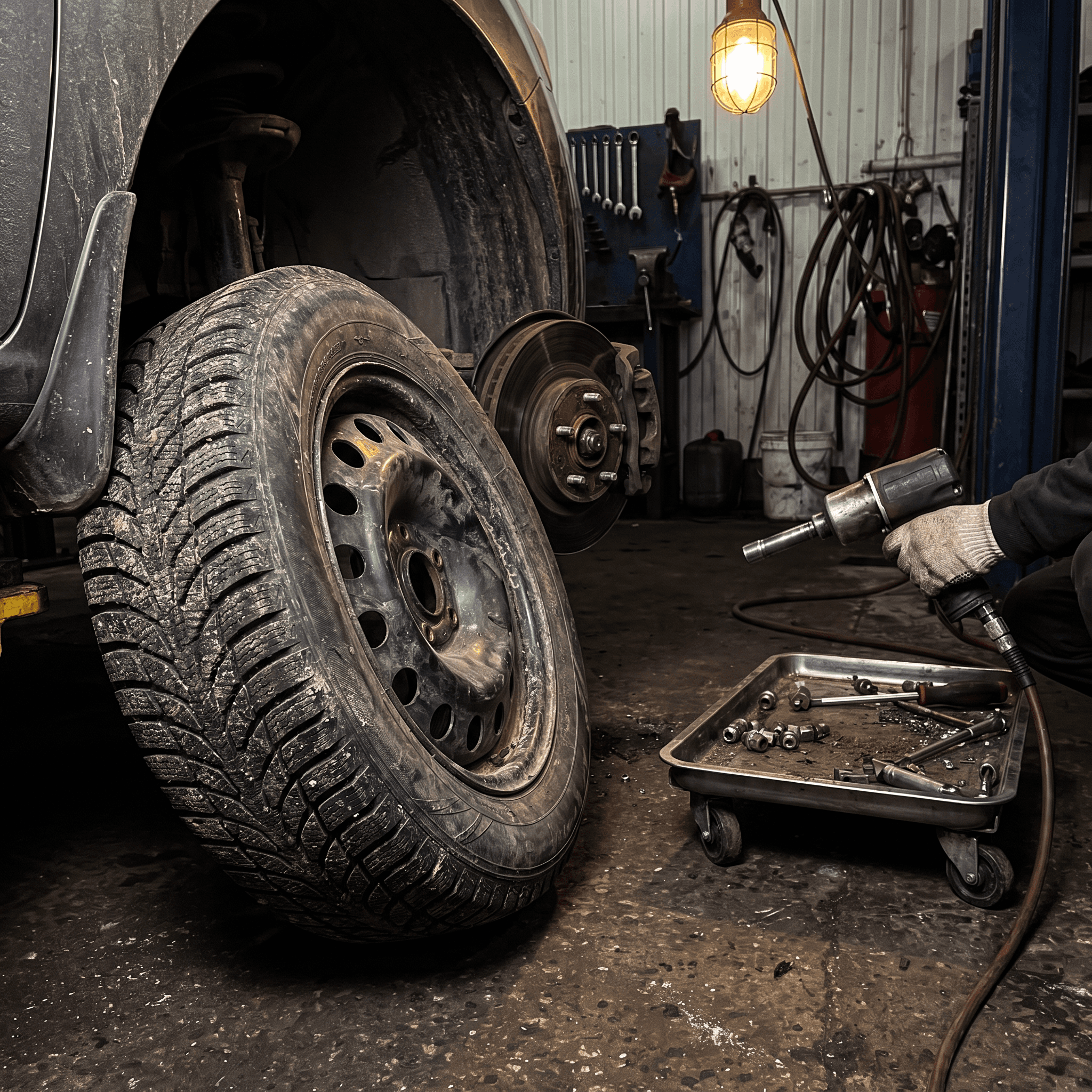
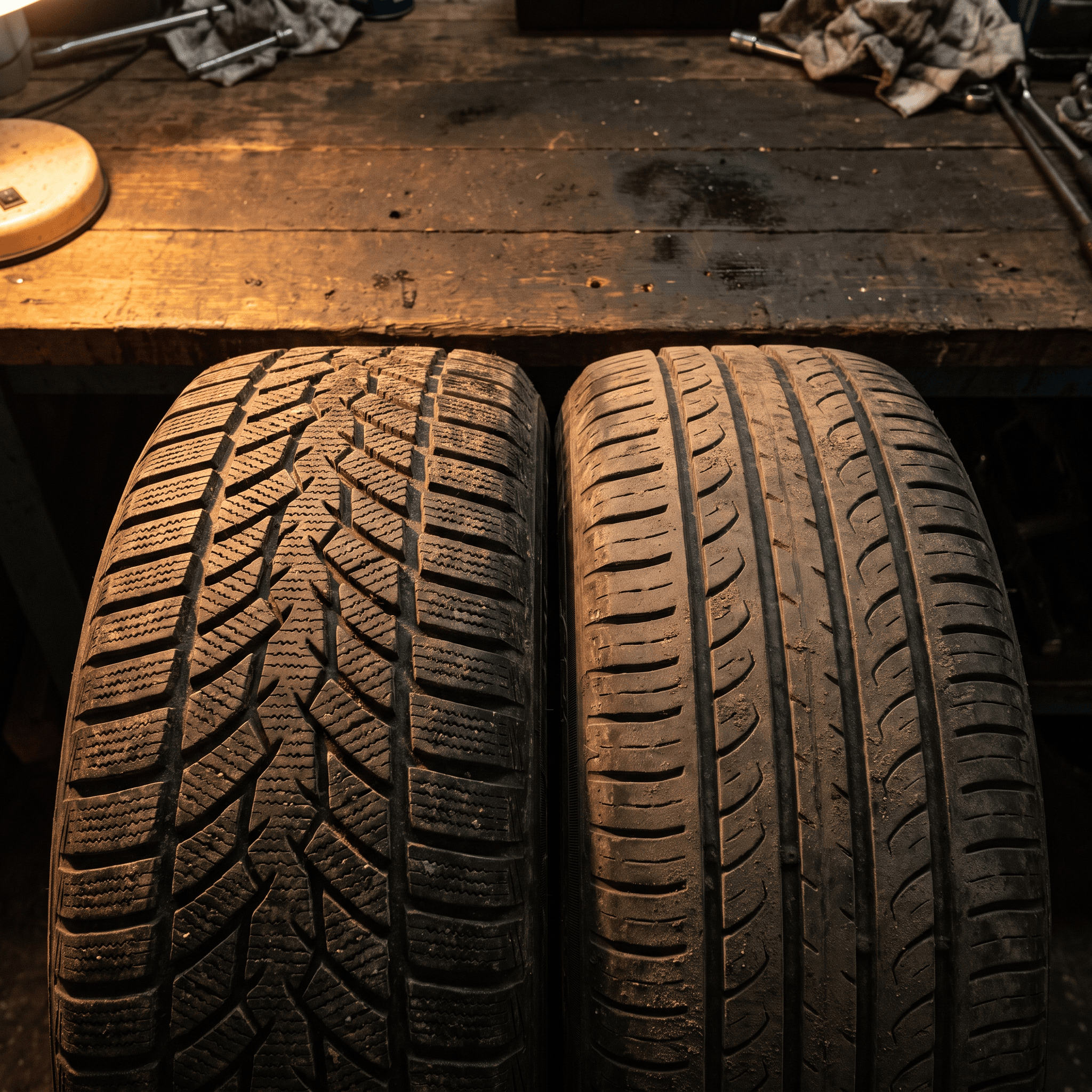
The thing that makes a tire a true winter tire is the three-peak mountain snowflake symbol moulded into the sidewall. Look for a little pictograph of three mountain peaks with a snowflake inside. That symbol means the tire passed a defined snow-traction test.
M+S is a different marking. It stands for mud and snow, and it's a self-declared tread-pattern description with no cold-weather test behind it. Most all-season tires carry M+S. Most insurers won't accept it as a winter tire, and if you're phoning your broker with an M+S set, you'll probably get told no.
So before you call: crouch down beside one tire, find the sidewall markings, and look for the snowflake. Thirty seconds, and it saves you a conversation you'd rather not have.
Where all-weather tires fit in
All-weather tires are a real third category, and they get overlooked. They carry the snowflake, which means they pass the same snow-traction test as a winter tire, but they're built to run year-round. No changeover, no second set of wheels, and they usually qualify for the insurance discount.
There's a real trade-off. Compared with a dedicated winter tire, an all-weather gives up some grip on genuinely cold pavement and in deep snow. It also wears faster than a summer or all-season tire through a hot July.
Who they suit:
- Low-kilometre drivers who mostly stay in town
- Anyone without space to store a second set of tires
- Drivers who'd rather not book two appointments a year
Who's better off with dedicated winters:
- A daily 401 commute in the dark, in January
- Anyone on a rural sideroad in Puslinch or the townships that doesn't see a plow first
- Drivers who've had a scare on cold pavement and want the best grip available
Both answers are defensible. If you're already on decent all-weathers, you probably don't need to buy a second set of tires. You need to phone your broker.
We tell you when you don't need the work.
Request a time and the receptionist calls you back, usually the same day. You get a firm price before anything starts.
Why winter tires work on cold, dry pavement
It's the compound, not the tread — winter rubber stays pliable when all-season rubber has gone stiff. Where you notice it: stopping distance from 50 km/h at a light that turned amber, and how the car settles into a cold on-ramp instead of washing wide. Tread pattern and siping handle the snow and slush. The compound handles everything else.
That's the answer for the driver who says it barely snows here anymore. Maybe not. But it's still 2°C at seven in the morning from November to March.
Booking a changeover in Puslinch and Guelph
We're at 288 Brock Rd S in Puslinch, just off the 401, and we handle tire sales, installation and seasonal changeovers for drivers from Guelph, Cambridge, Kitchener, Milton and the surrounding townships. October fills up. That's not a sales line, it's just what happens every year when the first cold snap lands and everyone calls the same week.
One thing worth knowing about a changeover: the wheels come off. Brakes, suspension and diagnostics happen in the same bays here, so that's the one appointment a year where someone gets a clear look at a scored rotor, a leaking shock or a tire wearing unevenly on one edge. If we spot something, we'll tell you whether it's a now problem or a watch-it-till-spring problem, and quote a firm number before anything starts. If nothing's wrong, we say so and you're on your way.
Common questions
Are winter tires required in Ontario?
No. Ontario does not legally require winter tires on passenger vehicles. Quebec does, from December 1 to March 15. The only Ontario rule on the subject applies to insurers, who have been required to offer a winter tire discount since January 2016.
How do I get the winter tire insurance discount in Ontario?
Call or email your broker and tell them all four wheels are on winter tires. It isn't automatic. Most insurers ask for proof, usually the purchase invoice or the installation work order showing the tires and size. Keep that paperwork in the glovebox.
What dates do I need winter tires on for insurance?
Most insurers expect them on for a defined season, roughly October or November through April. Ask yours for the exact range, since it varies. Installing in late October and removing in April generally satisfies both the insurer's calendar and the 7°C weather trigger.
Do all-season tires count for the discount?
Usually not. Insurers look for the three-peak mountain snowflake symbol on the sidewall. M+S markings on all-seasons aren't the same thing. All-weather tires do carry the snowflake and typically qualify.
Is a changeover included if you store my tires?
Ask when you book and we'll tell you exactly what's included before anything starts. Pricing depends on your wheel size and whether the tires are already on rims, so we quote your vehicle rather than posting a number here.
Book before October fills
If your tires are already snowflake-marked, do two things: call your broker about the discount, and get a changeover booked for late October before the calendar tightens up.
Call the shop, or send a request online and the receptionist calls you back — usually the same day. Hours, the phone number and the map are on the booking page, and you can see what we carry on the tires page.
We tell you when you don't need the work.
Request a time and the receptionist calls you back, usually the same day. You get a firm price before anything starts.