Brakes grinding noise, squealing or clunking: what each sound means
Not every brake noise is the same problem. A grinding noise on your first stop of the morning is usually surface rust and nothing to book; a deep metal grind on every stop means you should stop driving and call someone. Here's how to tell which one you've got.
What each brake noise usually means
Match the sound to the line, then decide whether you need to keep reading.
- Light scraping grind on the first one or two stops after the car sat overnight, gone by the end of the street. Surface rust on the rotor faces. Normal.
- High-pitched squeal or metallic screech on most stops at road speed, doesn't clear as the car warms up. Wear indicator tab touching the rotor. Soon problem.
- Deep, coarse metal-on-metal grind on every stop, sometimes felt through the pedal. Friction material is gone and the backing plate is on the rotor. Now problem.
- Clunk or knock over bumps, or when you brake hard. Loose brake hardware, worn caliper mounting, or a suspension component. Get it looked at.
- Hum or growl that changes pitch when you steer left or right, on or off the brakes. Likely a wheel bearing. Get it diagnosed before anyone quotes pads.
- Grinding that recently stopped on its own. Something changed rather than healed. Call.
If you landed on the first line, you're fine. The rest of this explains why.
The morning grind that clears after two stops
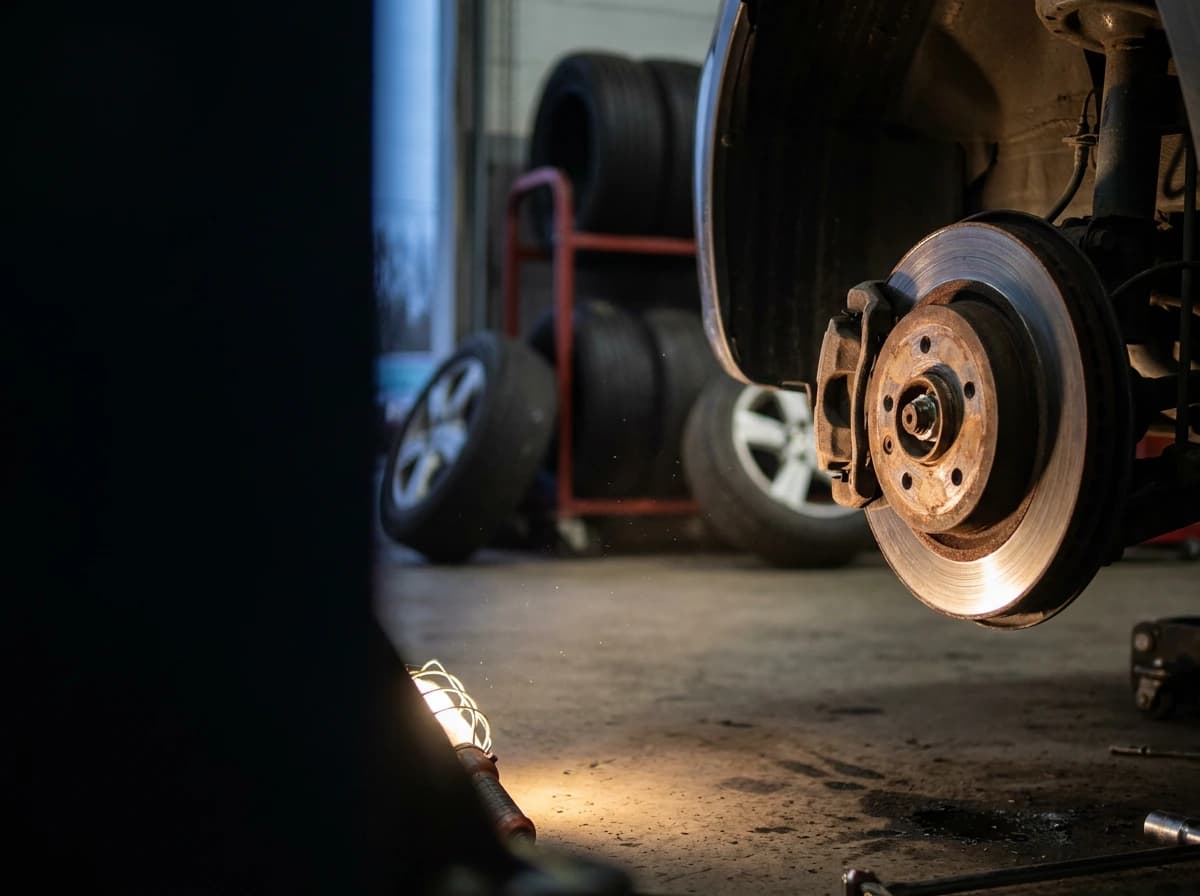
Rotors are bare cast iron. Nothing coats the friction face, because anything you coated it with would ruin the braking. So overnight dew, rain, a run through the car wash, or a damp Puslinch morning puts a thin film of rust across the surface within hours. On the first stop, the pads scrape it off. That's the sound.
Test it on your way out tomorrow morning. Drive to the end of the street, come to two or three normal stops, and listen. If the noise is gone and doesn't come back until the car has sat overnight again, you have nothing to book. Same story if you notice it worse on Monday than Friday, because the car sat all weekend.
Cars that sit for a week at a time or live outside year-round do this more. So do rear rotors on a lot of vehicles, since the fronts do most of the work and stay cleaner.
Rust film wipes off. Deep pitting doesn't. A rotor that sat through a whole winter on a parked vehicle can be scaly enough that the grind never fully clears, and that's usually a rotor conversation rather than a pad one.
A high-pitched squeal means the wear indicator
Most pads have a small spring-steel tab riveted to the backing plate, sitting slightly behind the friction surface. Once the pad wears down past a set thickness, the tab reaches the rotor and drags on it. The squeal is engineered. It's the pad telling you it's near the end.
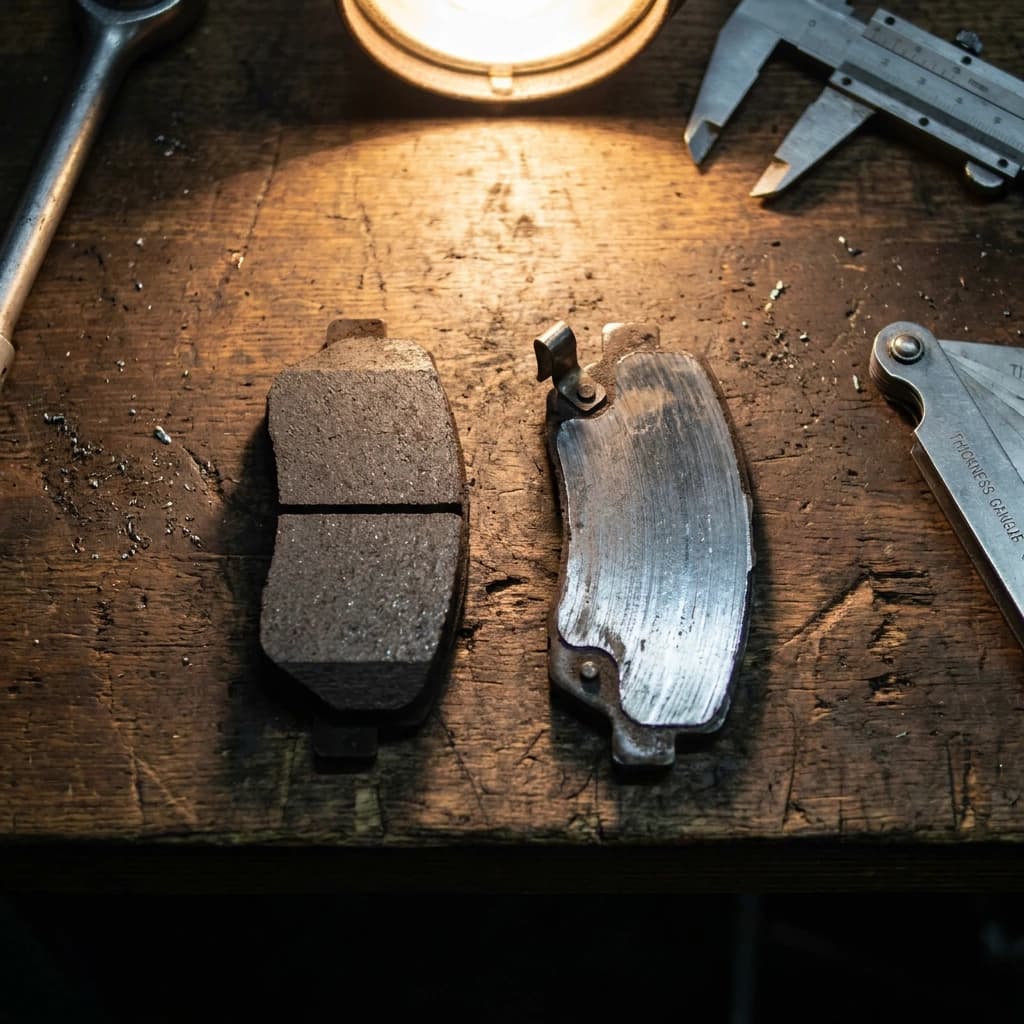
It sounds different from morning rust in one clear way. The squeal shows up on most stops, at road speed, and it doesn't quiet down after the first couple of stops. It often gets louder at low speed as you roll to a halt. Damp mornings can make it louder, which is why people often think it's weather-related when it isn't.
This is a soon problem, not a now problem. Keep driving normally. Book in the next week or two. You've still got friction material between the steel and the rotor, which is the whole point of getting a warning instead of a failure. What you don't want to do is give it another two months, because that's how a pad-only job turns into pads and rotors.
Squeal without the wear indicator happens too. Glazed pads, dust and grit trapped between pad and rotor, hard cheap friction material, or a pad backing plate that isn't sliding freely in the bracket. Those tend to be intermittent and change with temperature. Worth mentioning at the counter so someone actually looks, rather than reflexively selling pads.
A deep metal grind is a now problem
Is it safe to drive with grinding brakes? No. Please don't.
Grinding means metal on metal. The friction material has worn away and the steel backing plate is pressed against the rotor on every stop, cutting grooves into it. Two things happen at once. Your stopping distance gets longer, because steel on steel doesn't grip like pad compound. And the damage compounds every kilometre you drive.
That second part is what costs money. Pads are the cheaper half of a brake job. Once the backing plate has been scoring a rotor for a week of commuting, the rotor is often past machining and has to be replaced. Sometimes the caliper gets involved too, if the piston has pushed out far enough to stick or the dust boot has torn. A straightforward job turns into a bigger one purely because the noise got ignored. We broke down what each of those actually costs in our guide to brake repair pricing in Ontario.
If you're hearing this, the advice is short. Don't drive it further than you have to. Get it on a hoist, wheels off, and have someone actually look at it. Pricing depends entirely on the vehicle and what the rotors look like, so nobody should be quoting you a number before that happens.
We tell you when you don't need the work.
Request a time and the receptionist calls you back, usually the same day. You get a firm price before anything starts.
Why the grinding stopping is the bad sign
Grinding that goes quiet on its own is usually worse news than grinding that continues.
Noise stops for reasons. A caliper that's seized or a slide pin that's stopped moving takes that pad out of contact, so the grind disappears while your braking gets worse and the other side works harder. A pad that has worn completely through can change what's touching what. Hardware can shift and the noise moves or vanishes. None of those are the brake fixing itself.
So check for the tells. Does the pedal feel different, softer or longer than it did? Does the car pull to one side under braking? After a drive, is one wheel noticeably hotter than the other three when you hold your hand near it, or is there a burning smell off one corner? Any of those alongside vanished grinding means get it inspected instead of counting it as a win.
When the noise changes as you turn
Not everything you hear at the wheel is a brake. If the sound is a hum, growl or drone that rises and falls as you swing the wheel left and right at steady speed, and it's there whether or not your foot is on the pedal, a wheel bearing is the likelier suspect.
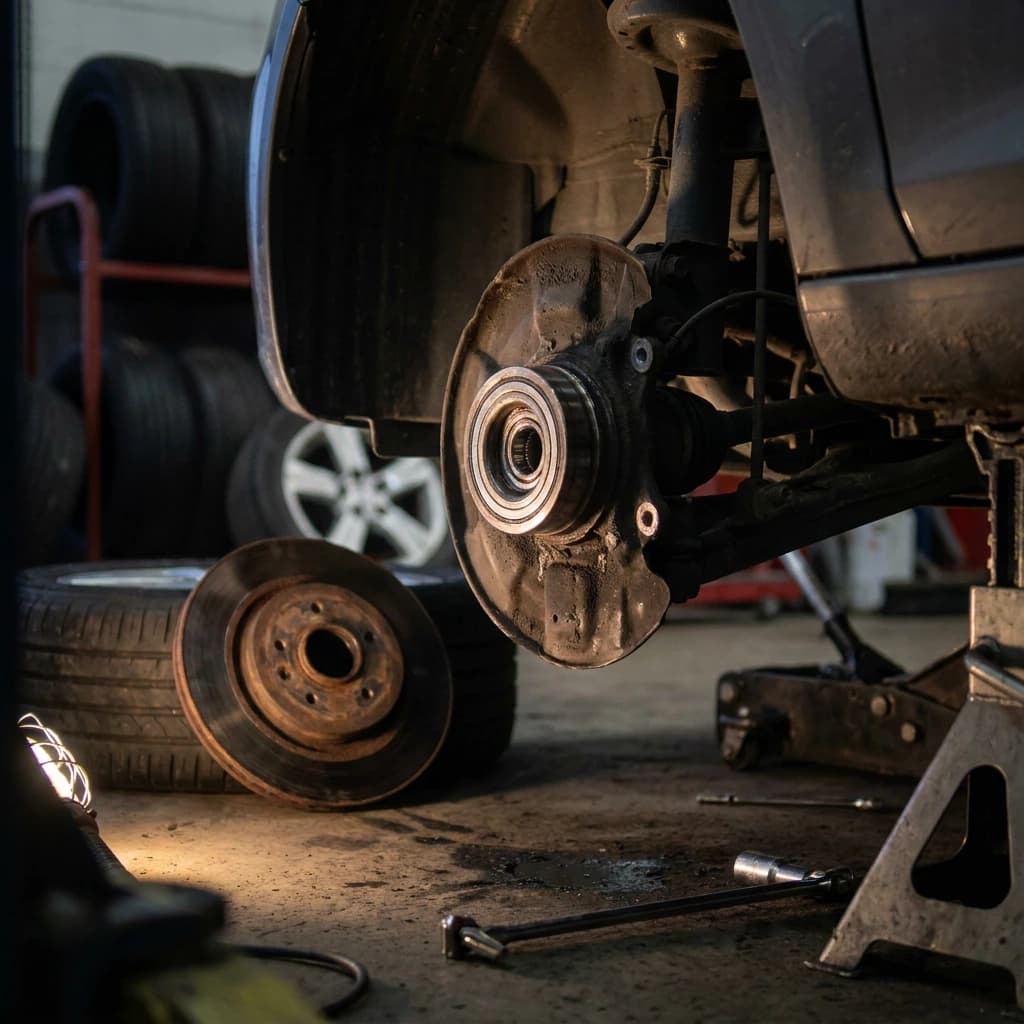
Turning shifts load from one side of the car to the other. A worn bearing gets louder under load and quieter unloaded, so the pitch and volume change with the steering. Brake noise tracks the brake pedal instead. Press harder, hear more.
A rhythmic noise tied to wheel speed rather than pedal pressure points the same direction, or sometimes at a tire with uneven wear. Tires are worth ruling out early, because a cupped or feathered tire can hum convincingly enough to fool most people.
This is why the wheels come off and the pad thickness gets measured before anything gets quoted. Selling somebody pads for a bearing noise means they pay, drive away, and still hear it. Nobody wins that one. If the noise is doing this, get it diagnosed before anyone sells you pads. We'll tell you what we find, including when the answer isn't brakes.
What we check and what we tell you
Wheels off, all four. Pad thickness measured, front and rear, not eyeballed. Rotors checked for grooves, ridges and runout. Hardware, slide pins, hoses and caliper boots looked at. And where we can, we reproduce the noise, because a sound you can hear beats a guess. That's what a diagnostic is for.
Then you get the plain version. If yours can safely go another few thousand kilometres, we say so, and we tell you what to listen for in the meantime. We replace what's worn, not what's convenient. That's the part people mention most in our Google reviews, and it's how we've worked off Brock Rd since 2008. A firm number before anything starts.
Common questions about brake noise
Why are my brakes squeaking only in the morning?
Almost always surface rust on the rotor faces from overnight moisture. The pads scrape it off in the first couple of stops and the noise goes. If it's gone by the end of your street and doesn't return until the car has sat again, nothing needs booking.
My brakes are making noise but the pads look fine. What else could it be?
Rotor surface rust, grit caught between pad and rotor, glazed friction material, or hardware that isn't letting the pad slide properly. It can also be a wheel bearing or an unevenly worn tire, neither of which has anything to do with the pads.
How long can I drive on squealing brakes?
The wear indicator is designed to give you warning, not zero notice. Days to a couple of weeks of normal driving is reasonable. Leaving it for months is how you end up buying rotors as well as pads.
Do grinding brakes always mean I need new rotors?
Not always. If the grooves are shallow enough that the rotor still measures above its minimum thickness, it can sometimes be reused or machined. The longer the backing plate has been cutting into it, the less likely that is.
What to do this week
Sort it by what you actually heard. Morning grind that clears after two stops, watch it and get on with your day. Squeal on most stops, book in the next week or two. Deep metal grind, or a grind that suddenly went quiet, call before you drive it further.
We're in Puslinch, easy off the 401 at Brock Rd, which makes it a short run from Guelph, Cambridge or Milton. If you've already got a quote from somewhere else, bring it in. We'll price the same job honestly.
We tell you when you don't need the work.
Request a time and the receptionist calls you back, usually the same day. You get a firm price before anything starts.